

Choosing a bathroom mirror is not just a style decision. If the mirror is too narrow, too small or hung at an awkward height above your vanity, you will notice it every morning while shaving, applying makeup or brushing your teeth. Most Melbourne vanities come in set widths measured in millimetres, and the mirror needs to relate sensibly to that width rather than being bought on looks alone. This guide connects mirror size to common Australian vanity dimensions and practical hanging positions, so you can choose a mirror that suits how you actually use your bathroom.
Start with your vanity measurements, not the mirror catalogue
Before comparing mirror sizes, measure the width of your vanity and note the available wall space above and around it. Note the position of tapware, power points, wall lights and any cabinetry, because these constrain where a mirror can sit. The general rule many retailers and designers use is that a mirror should not be noticeably wider than the vanity beneath it; it should look balanced with the vanity's size and style. Compact terraces in inner Melbourne and larger new-estate bathrooms will produce different answers from the same rule, so let your actual wall space and vanity width drive the decision.
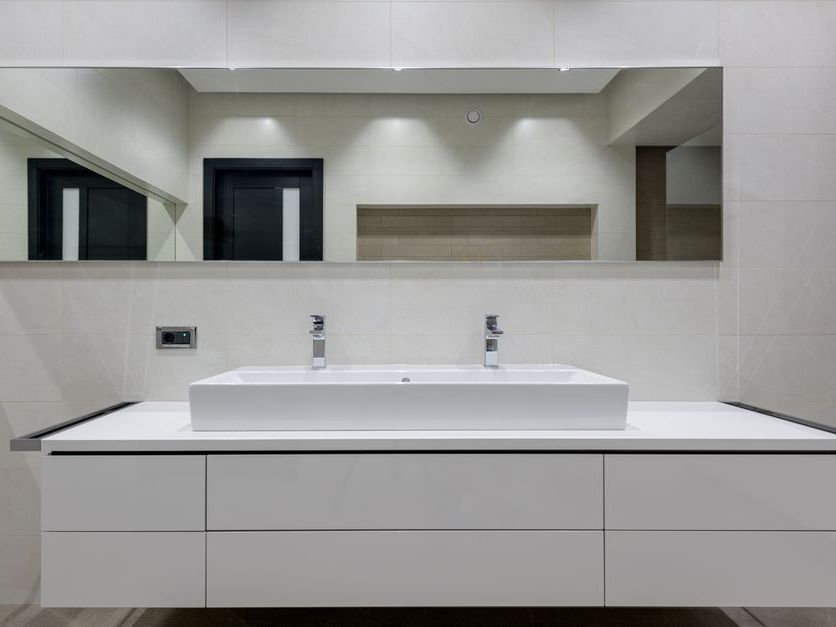
Relating mirror width to common Australian vanity widths
Australian vanities are typically sold in round widths in millimetres, so mirror shopping becomes clearer when you think in the same units. A good practical approach is to match the mirror close to the vanity width so the mirror's edges sit roughly in line with or slightly inside the vanity edges. If your wall space is tight, a narrower mirror centred over the basin still works visually and avoids crowding taps or side walls. Measure the gap you need beside the mirror for your hands, cleaning access and any wall-mounted items, and treat that gap as fixed before you consider any mirror.
For example, the Modern Freestanding Vanity - Hamilton 590/740/890mm gives a sense of how vanity widths in millimetres translate into mirror choices: a mirror close to the vanity width looks balanced, while one much narrower can look undersized above a wider top. Check the current product or supplier information before deciding. Compare your own vanity width to the mirror width you are considering and check whether the proportions look right in real life, not just on a screen.
How tall should the mirror be above a vanity?
Mirror height should be judged from eye level and from what you need to see. Your reflection should be framed comfortably when you stand at the basin, with the mirror covering the area between your face and upper body rather than stopping abruptly at chin height. A common approach is to hang the mirror so it sits centred on your face when standing normally, extended downward toward the vanity and upward to suit the wall and any lighting. Because ceiling heights and vanity heights vary between Melbourne homes, check the mirror's height against your own standing eye level before purchase.
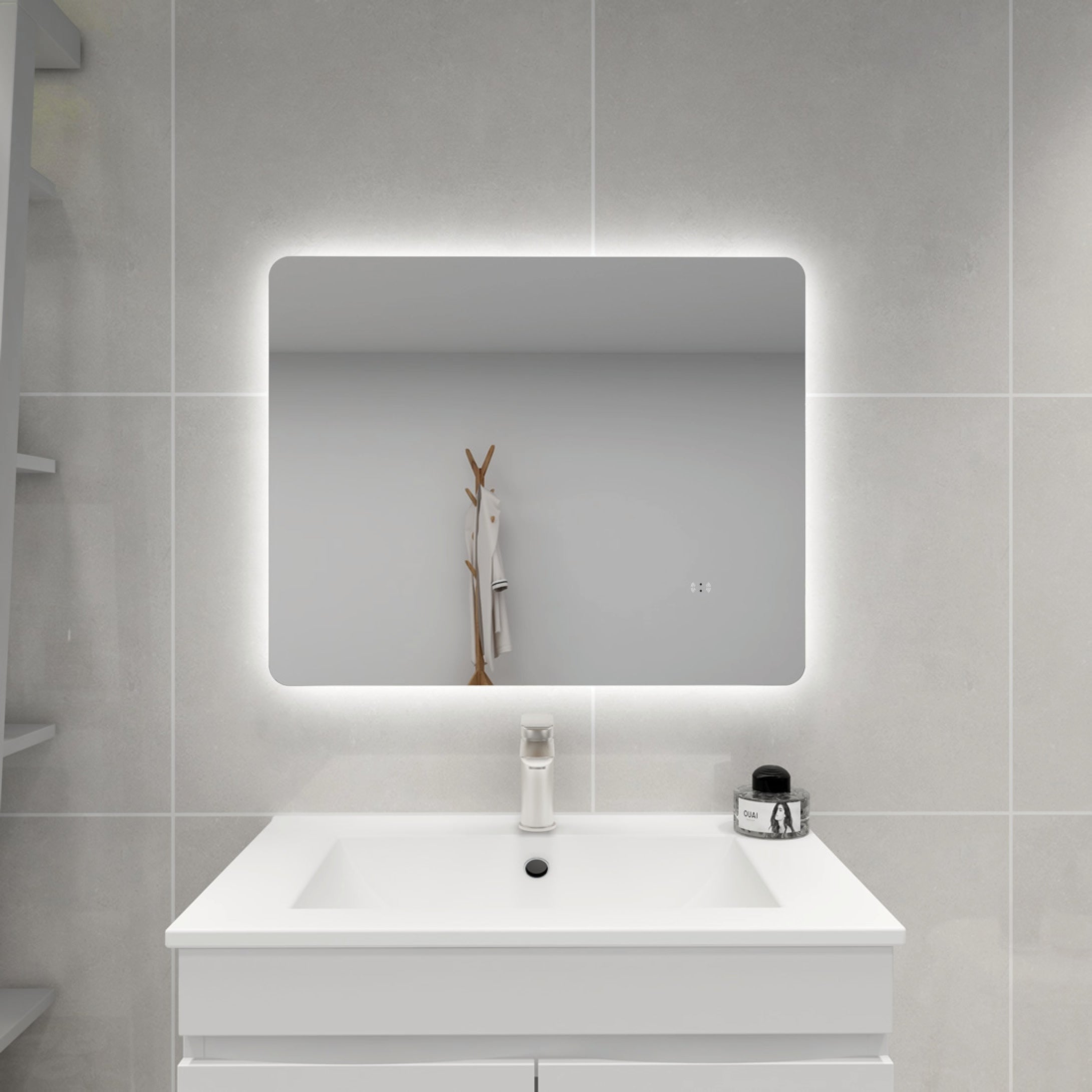
If you are considering a mirror with integrated lighting, such as the LED Bathroom Mirror 900mm (https://terahomes.com.au/products/led-bathroom-mirror-900), confirm the electrical requirements and mounting instructions with a licensed electrician rather than assuming how it should be wired. The product listing is the place to check the manufacturer's stated specifications, dimensions and installation guidance; do not rely on assumptions about brightness, function or wiring from a visual listing.
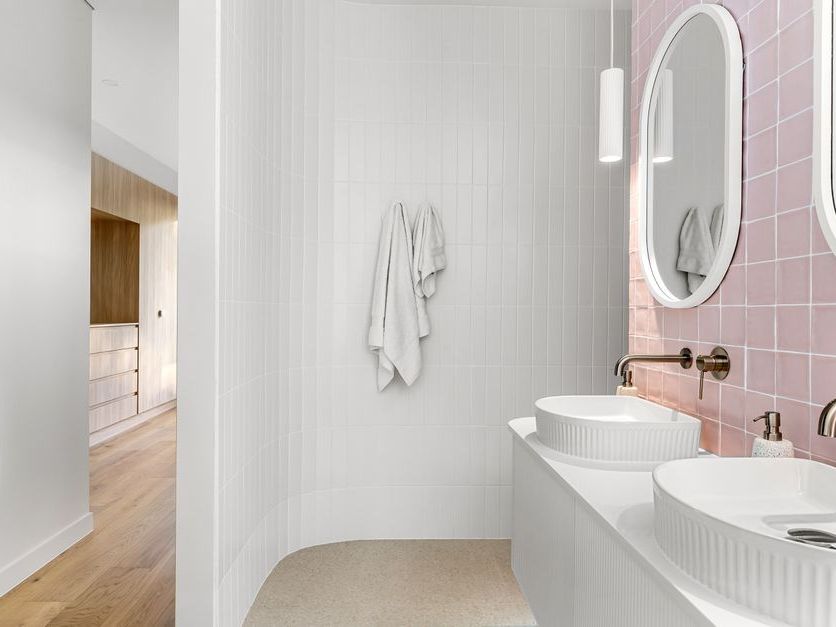
Choosing between a wall mirror and a shaving cabinet
The decision between a flat mirror and a mirrored cabinet depends on storage needs. A Bathroom Shaving Cabinet (https://terahomes.com.au/products/shaving-cabinet-mirror) can provide mirrored storage above the vanity, which matters in smaller Melbourne bathrooms where cupboard space is limited. Before choosing, measure the wall cavity depth and confirm whether the cabinet is surface-mounted or recessed, then check the manufacturer's installation instructions. For a simpler option, a Plain Bathroom Mirror 600mm (https://terahomes.com.au/products/plain-bathroom-mirror-600) can suit smaller vanities or tight wall spaces, provided its width and height work with your vanity and viewing position.
Placing the mirror for daily use and safety
Placement should support how the bathroom is used, not just how it looks. Hang the mirror so it lines up with your face at the basin, avoids blocking power points or taps, and leaves clearance for lights and towel rails. If the mirror is large or heavy, have it mounted by someone competent to assess the wall structure and fixings, and engage a licensed plumber or electrician where water or electrical services are involved. Confirm any requirements for mirrors near wet areas with your installer or a qualified tradesperson, because local requirements can differ.
Practical checks before you buy a Melbourne bathroom mirror
Bring your vanity width, wall space, eye-level measurement and a photo of the wall to the decision. Check the mirror's listed dimensions against those measurements, confirm whether it needs electrics, and ask about installation and warranty terms with the seller. In Melbourne's varied housing stock, from narrow terraces to new estates, the same mirror can feel generous in one bathroom and cramped in another, so check the space and the window or door swing. If you are unsure about wall fixings, moisture exposure or electrical connections, stop and seek professional advice before mounting anything.
Frequently Asked Questions
Should a bathroom mirror be as wide as the vanity?
A mirror that is close to the vanity width usually looks balanced, and a mirror substantially wider than the vanity can look out of proportion. Match the mirror width to your measured vanity width and the available wall space, and check the proportion in your actual bathroom before buying.
How high should I hang a mirror above a vanity?
There is no single height that suits everyone. Position the mirror so your face sits comfortably in it when you stand at the basin, then check the height against your own eye level and ceiling. If in doubt, ask your installer to confirm the position before drilling.
Can I install a bathroom mirror myself?
Simple flat mirrors may be suitable for a careful DIY installation if you understand the wall structure and fixings. However, mirrors with lighting or electrical components need a licensed electrician, and any work near plumbing or waterproofing should be assessed by a qualified tradesperson.
Is a shaving cabinet better than a plain mirror?
A mirrored shaving cabinet adds storage above the vanity, which can help in smaller bathrooms where cupboard space is limited. If storage is not your priority, a plain mirror may suit, but check the dimensions and installation requirements of whichever option you choose.
Can I use a standard mirror in a wet area?
Bathroom mirrors should be suitable for their location, and moisture exposure varies around the room. Check the manufacturer's guidance and consult your installer about placement, especially near showers, and confirm current local requirements before installation.
If you would like to compare options before deciding, take your measurements to the TeraHomes range, including the LED Bathroom Mirror 900mm and Plain Bathroom Mirror 600mm, and cross-check each mirror's dimensions against your vanity before ordering. For related guidance, see How to Choose the Right Bathroom Vanity Size for an Australian Home.