If you don't know which smart toilet features actually matter for your bathroom and your budget, the honest answer is that the model matters less than your room does. The best smart toilet in Australia for your home is the one whose features line up with the plumbing you already have, the power you can realistically supply, and the space around the pan. Before you read a single feature list, check where the water connects and whether there is power near the toilet.
Start With Your Bathroom, Not the Feature List
For further reading, see How to Choose the Right Bathroom Vanity Size for an Australian Home.
Australian bathrooms vary enormously in age and layout. An older home may have the toilet in a separate powder room with no power point inside it, while a newer bathroom might already have a dedicated circuit near the pan. That difference decides more about your smart toilet choice than any brand comparison.
Before you shortlist anything, assess your own setup:
- Water supply position. Note where the inlet currently sits relative to the pan. Moving plumbing is a licensed plumber's job.
- Power availability. Check whether there is a power outlet near the toilet and whether it suits a toilet that needs one. If not, a licensed electrician should advise on a safe supply.
- Floor space and clearance. Measure around the existing pan so you understand your available footprint.
- Waste outlet type. Note whether your toilet discharges through the floor or the wall, as this affects what can replace it.
If any of these checks raise questions, get a licensed plumber or electrician to assess the property. This is not something a product page can answer for you.
The Smart Toilet Features Worth Paying For
Feature lists can run long, and it's easy to assume more features means a better purchase. In practice, the features that change daily life are relatively few, and the rest are preferences.
Commonly discussed functions include bidet washing, warm air drying, seat heating, and some form of control — a remote or a panel. The practical question is which of these you will genuinely use.
A sensible way to sort them:
- Essential for most buyers: a washing function, a comfortable seat, and controls you can reach and understand easily.
- Nice to have: seat heating and warm air drying, which add comfort but also cost and complexity.
- Worth questioning: features you can't see yourself using, or controls that assume a layout your bathroom doesn't have.
More functions can mean more that could need attention over time, so reliability and local support matter. Check servicing and parts availability for any model and ask the retailer directly.
Power and Plumbing: The Checks That Decide Your Shortlist
Power outlets near toilets are not always present in Australian bathrooms, and many older layouts never anticipated a fixture that needs electricity. If your bathroom has no outlet near the pan, the question becomes whether one can be installed safely and practically — and only a licensed electrician who has seen the room can answer that.
Water pressure is a related consideration. Some smart toilet functions depend on the water supply performing in a particular way, but specific requirements vary by model. Ask the supplier or your plumber to confirm what a given model needs in your situation.
The safest sequence is:
- Identify whether power and water are available where the toilet sits.
- If not, get professional advice on what's feasible before you choose a model.
- Only then compare features against your confirmed setup and budget.
Matching Features to Space and Layout
Space is the quiet decider. A smart toilet may have a different footprint from the toilet it replaces, and in a tight bathroom that matters as much as any feature. If your bathroom is compact, the same principles that apply to choosing a bathroom vanity size apply here: work out your available space first, then choose a fixture that fits it.
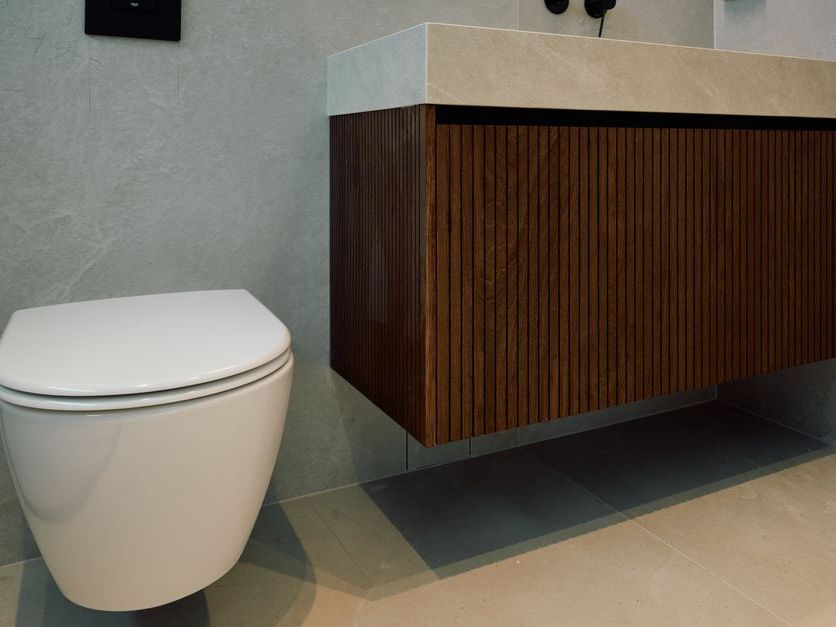
Wall-hung versus floor-mounted positioning, the distance to adjacent walls, and how the door swings all affect what will work. If your bathroom is small, the storage and layout thinking in this guide to small bathroom vanity choices and storage tips is a useful parallel — planning the room around the fixture beats forcing a fixture into the room.
If several household members share the bathroom, controls that are easy to operate matter more than a long feature list.
Deciding Between the Dewei K2 and Dewei U9
Once you have measured your bathroom, compare the Dewei K2 and Dewei U9 against the same checks. Both product pages offer Basic, High and Top versions; they list features but do not map every feature to each version, so confirm the exact configuration with TeraHomes before ordering.
| Check | Dewei K2 | Dewei U9 |
|---|---|---|
| Dimensions shown on product page | 700 × 390 × 510 mm | 700 × 435 × 485 mm |
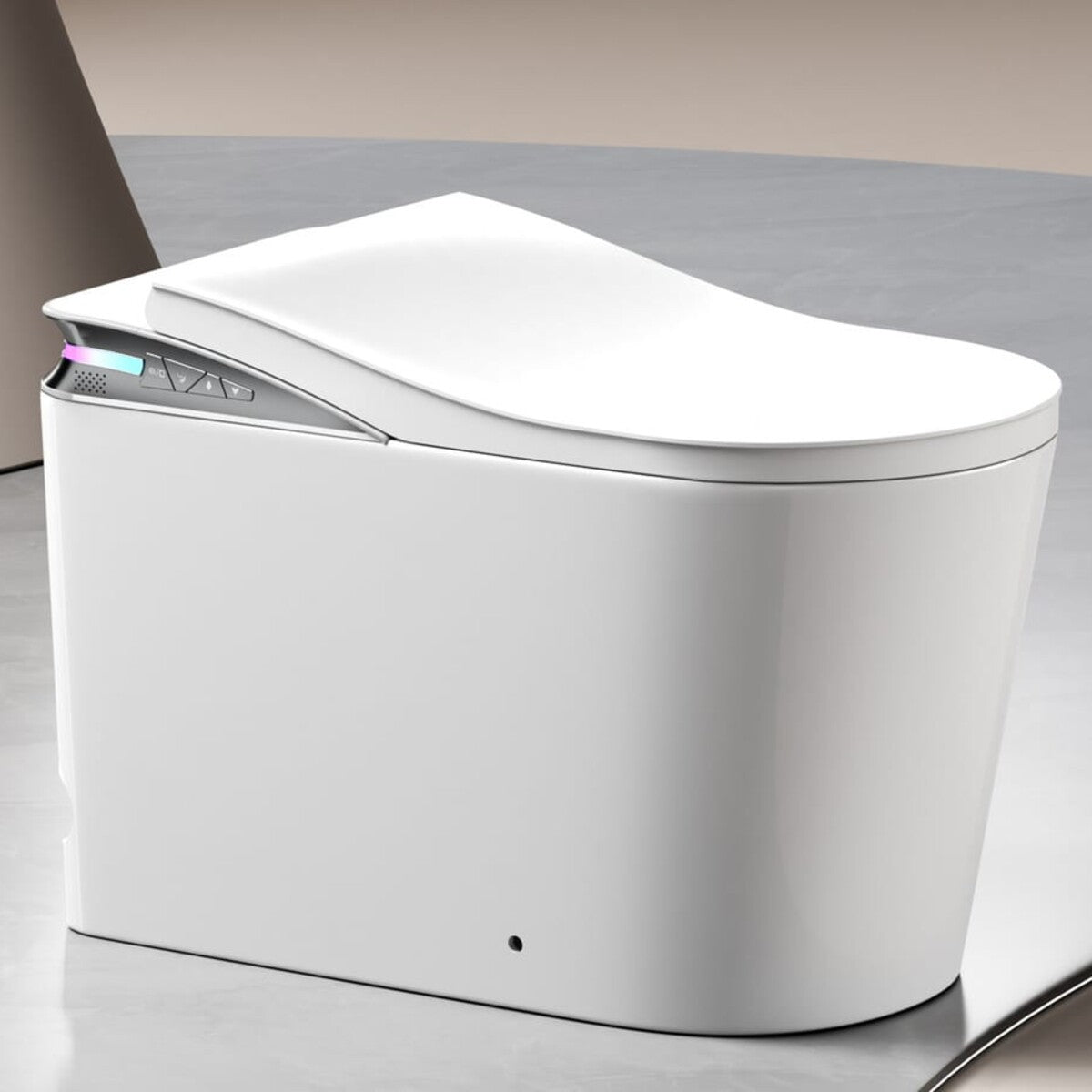
| Features shown on product page | Rear wash, heated seat, seat induction, night light, remote control, LED screen, adjustable water pressure and soft-close seat. The listing also mentions energy saving, one-click stop, mute-close and an antibacterial seat. | Front and rear wash, instant heated water, warm-air drying, off-seat and automatic flushing, child mode, night light, LED display, remote control and soft-close seat. |
| Waste connection information shown | The product page does not show an S-trap range or P-trap measurement. Ask TeraHomes to confirm compatibility with your measured outlet. | The product material lists an S-trap range of 50–220 mm and a P-trap measurement of 180 mm. Have your plumber confirm these against the actual site and selected version. |
| Versions listed | Basic, High and Top | Basic, High and Top |
The dimensions are shown as a three-number sequence on the product pages; confirm which number represents width, depth and height before comparing the toilet with your room or installation drawing. The feature list is not a version-by-version specification, so do not assume that every listed function is included in Basic, High and Top alike.
Check fit and installation before choosing
- Measure the available floor space and record the existing waste outlet type and rough-in.
- Ask for the installation drawing for the exact model and version, then compare it with your measurements.
- Have a licensed plumber confirm waste, water supply and installation compatibility.
- Have a licensed electrician confirm power requirements and the permitted position for the chosen model.
- Ask TeraHomes to confirm the functions included in your selected version, plus delivery, warranty and servicing details.
Choose only after the selected version and connection details are confirmed. You can compare the models on their K2 and U9 product pages or browse the TeraHomes smart toilet collection.
A Practical Order of Operations
Here's the sequence that works, whether you're upgrading a single toilet or renovating:
- Inspect your bathroom. Water inlet, power, space, waste outlet.
- Get professional advice from a licensed plumber and, if power is needed, a licensed electrician before committing.
- Define your essentials. Washing function, comfortable controls, and a space-appropriate footprint come first.
- Set your budget around the work required, not just the fixture.
- Compare models — including the Dewei K2 and Dewei U9 — against your confirmed setup.
- Confirm installation and servicing details with the supplier before purchase.
Walk into your bathroom with this list and note what you find. If everything checks out, browse the TeraHomes Smart Toilets collection with your essentials list in hand. If something doesn't add up, book a professional assessment first.
Frequently Asked Questions
Do I need a power outlet near my toilet for a smart toilet?
Requirements vary by model. Check for an existing outlet and, if there isn't one, speak to a licensed electrician before choosing a model — don't assume one can be added without professional assessment.
Will a smart toilet work with my existing plumbing?
It depends on your water supply position, waste outlet type, and available space. A licensed plumber should assess your bathroom before you commit, because moving plumbing is specialist work.
How do I know which features I actually need?
List the functions you'll use daily — typically washing and easy controls — and treat extras like heating and drying as optional. A feature that doesn't match your layout or habits is costing you money for nothing.
Can I install a smart toilet myself?
Installation involves plumbing and, where required, electrical work, which licensed tradespeople should carry out. Confirm the requirements with your supplier and arrange qualified professionals.
Which TeraHomes model should I choose?
Compare the Dewei K2 Intelligent Toilet and the Dewei U9 Intelligent Toilet against your confirmed power, water, and space checks. For related planning, see how to choose the right bathroom vanity size for an Australian home.